Tivoli, Italy · 30 km from Rome · UNESCO World Heritage

Villa d'Este Tours: The Water Gardens of Tivoli

The Renaissance garden of a thousand jets, an hour from Rome. Compare day trips with Hadrian's Villa from $67, or buy the €15 ticket and go on your own.

Daily From 8:30 · Mon from 14:00
2–3 hrs Typical visit
UNESCO World Heritage since 2001
€15 Full ticket · free under 18
What is Villa d'Este?

A Cardinal's Answer to Ancient Rome

Villa d'Este is a 16th-century villa and garden in Tivoli, a hill town east of Rome. It was created from 1560 for Cardinal Ippolito II d'Este, who wanted a summer palace to rival the luxury of the Roman emperors, with a garden of fountains unlike anything Europe had seen.

The result is a steep hillside of terraces, stairways and cypress avenues, threaded with water from the Aniene river. It became the model for Renaissance and Baroque gardens across Europe and has been a UNESCO World Heritage Site since 2001.

Most visitors come on a day trip from Rome, combined with the ruins of Hadrian's Villa, 5 km away. This site compares the tours and tickets so you can choose the right way to go.

Read the full history →

Address Piazza Trento, 5 · 00019 Tivoli (Rome)
Opening Hours Daily from 8:30 · Mondays from 14:00 · closing varies by season
Ticket Prices Full €15 · EU 18–25 €2 · Under 18 free
Combined Pass VILLÆ Pass €30 · Villa d'Este + Hadrian's Villa (72 h)
Organ Fountain Plays from 10:30, every two hours
From Rome About 30 km · train, Cotral bus or day tour
In the Garden

What You'll See at Villa d'Este

The Avenue of the Hundred Fountains at Villa d'Este

The Hundred Fountains

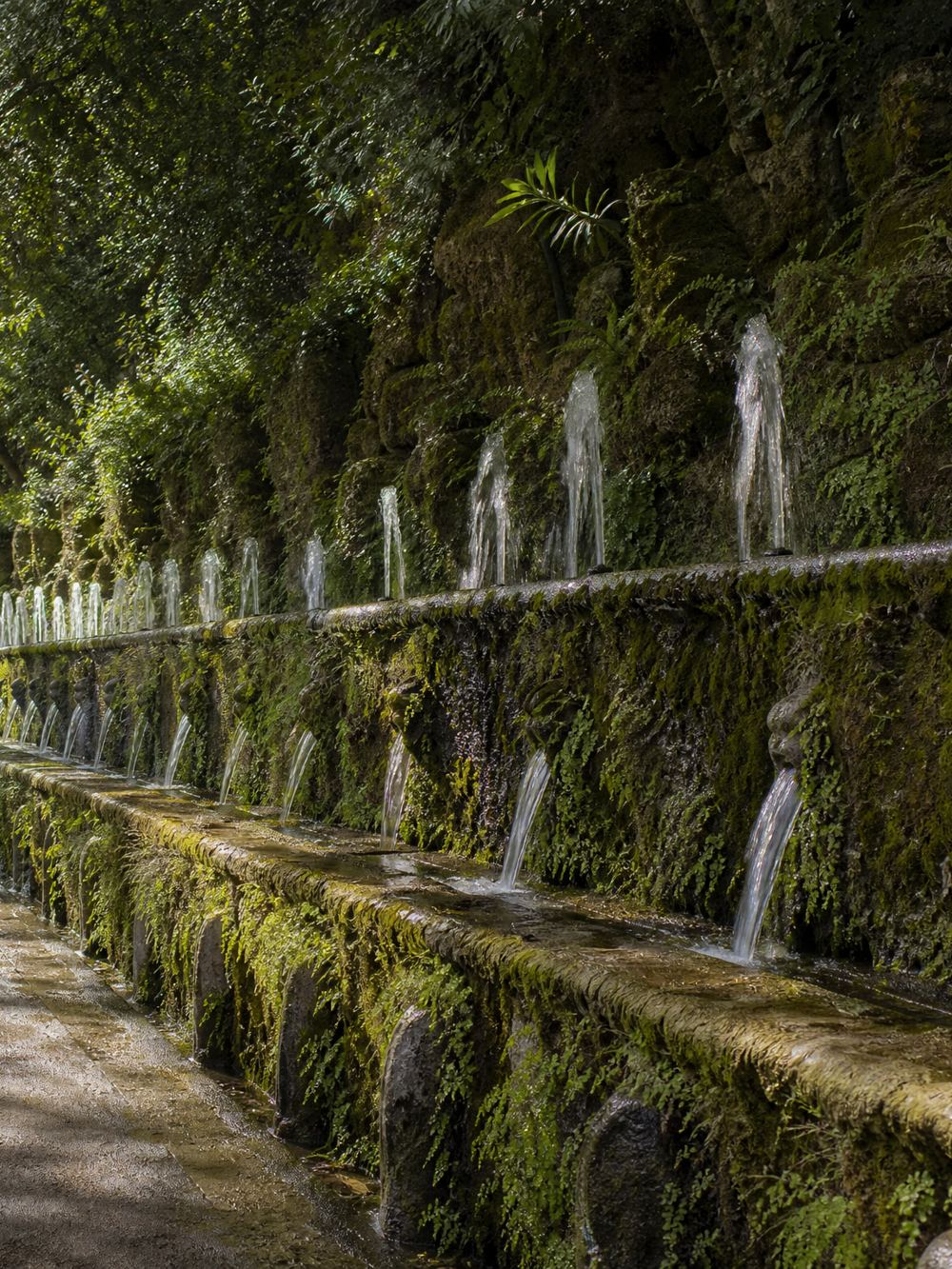
A path about 130 metres long beside three tiers of spouting jets, moss and ferns. It crosses the garden from side to side, and it is the photo everyone takes. Walk it slowly: the sound changes as you go.

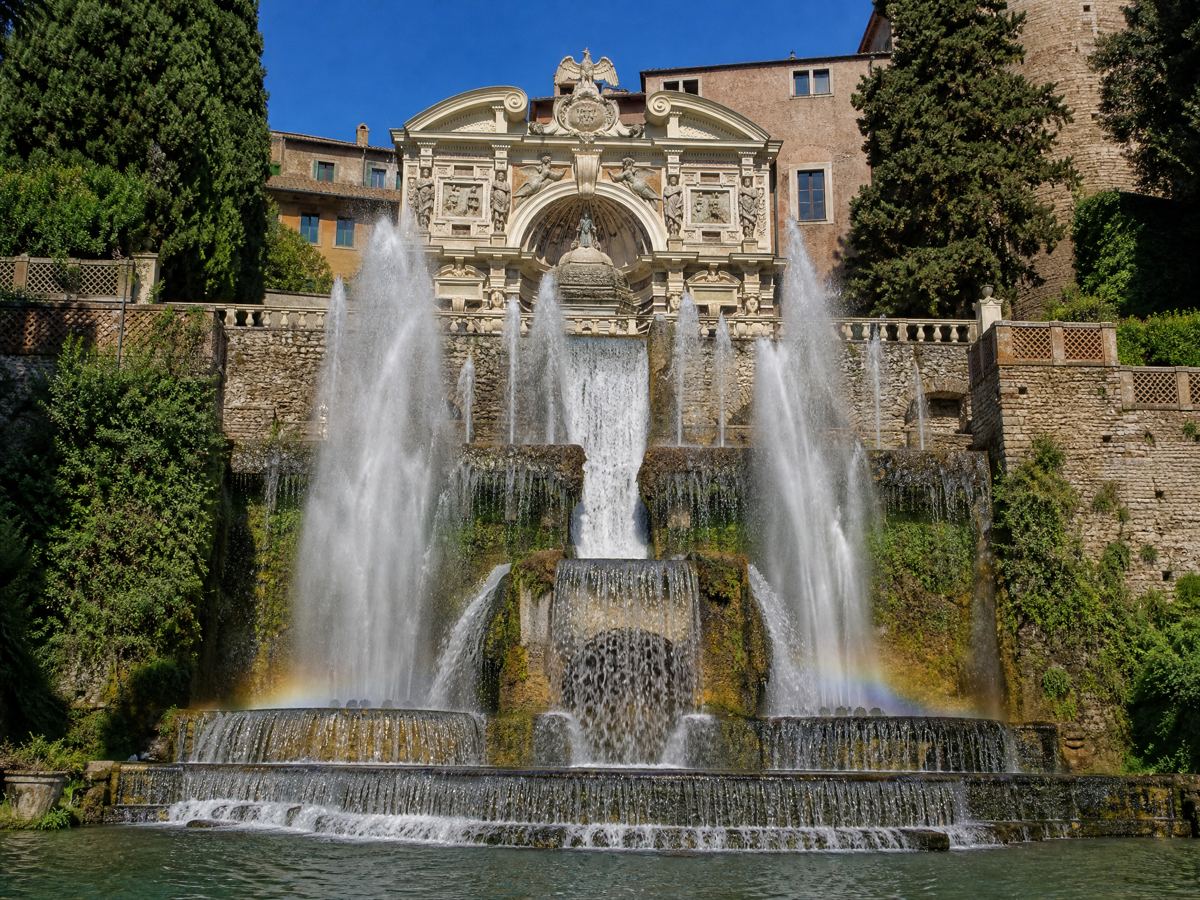
The Organ Fountain and Fountain of Neptune at Villa d'Este

The Organ Fountain

A water-powered organ inside a baroque façade, which plays music using only the pressure of falling water. It performs from 10:30 every two hours. Below it, the Fountain of Neptune sends up the garden's highest jets.

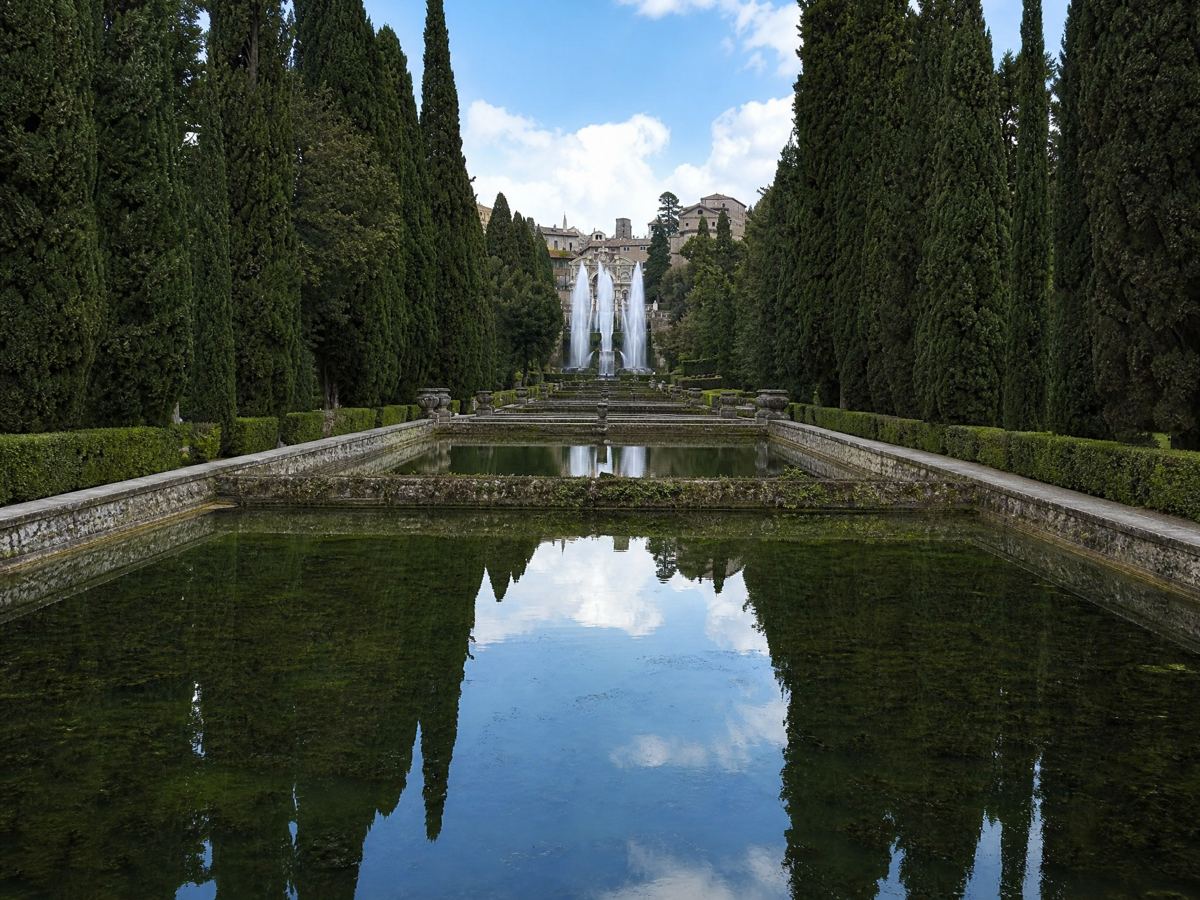
The fish ponds of Villa d'Este reflecting cypresses

The Fish Ponds

Three long, still pools across the bottom of the garden. They were stocked with fish and water birds in the cardinal's day; now they reflect the cypresses and the cascade of the Organ above, a rare quiet spot.

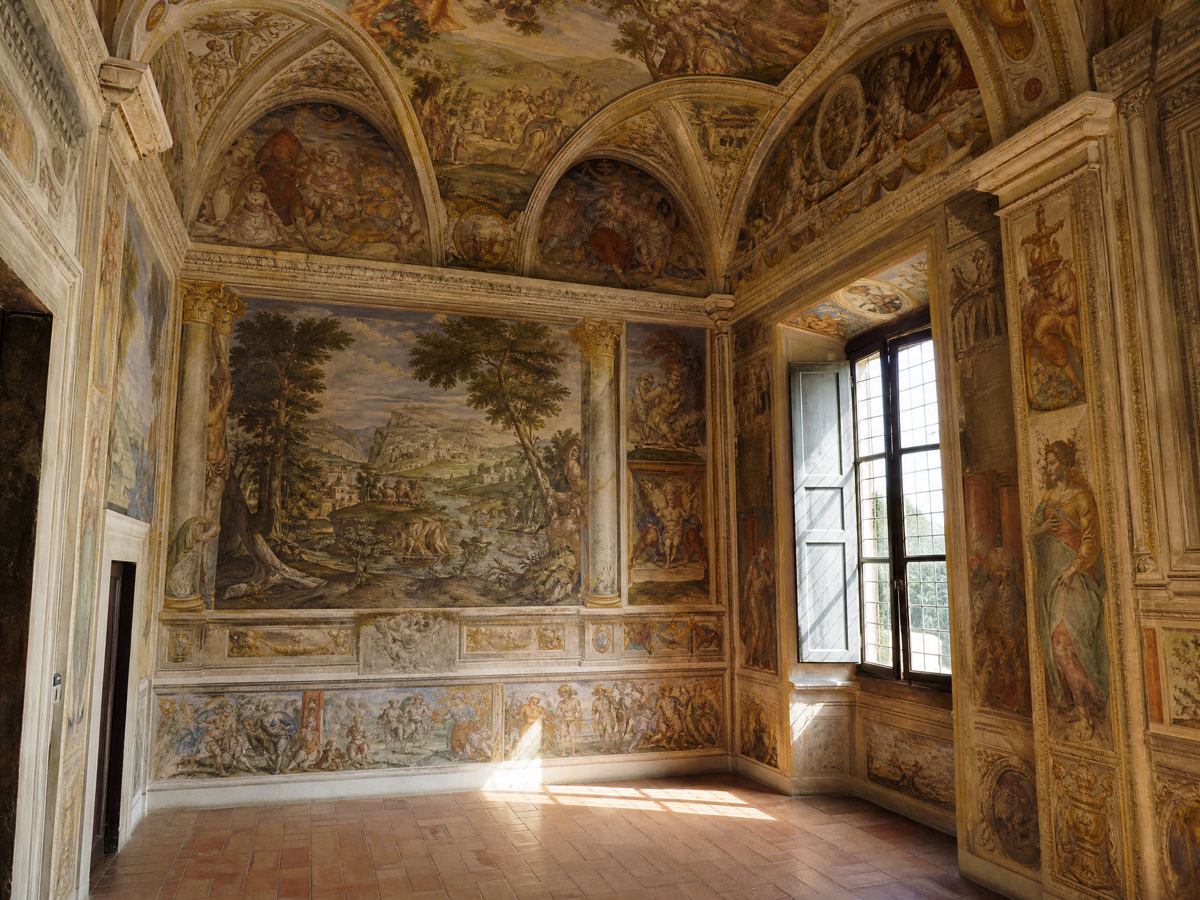
Frescoed room in the Villa d'Este palace

The Frescoed Palace

Most visitors rush through to the garden, but the palace rooms were painted in the 1560s by artists including Girolamo Muziano and Federico Zuccari. The loggia gives the best overview of the whole garden.

Book Online

Best Villa d'Este Tours & Tickets

Six ways to see Villa d'Este from Rome, from a simple entry ticket to a private car for the day. Most include Hadrian's Villa as well.

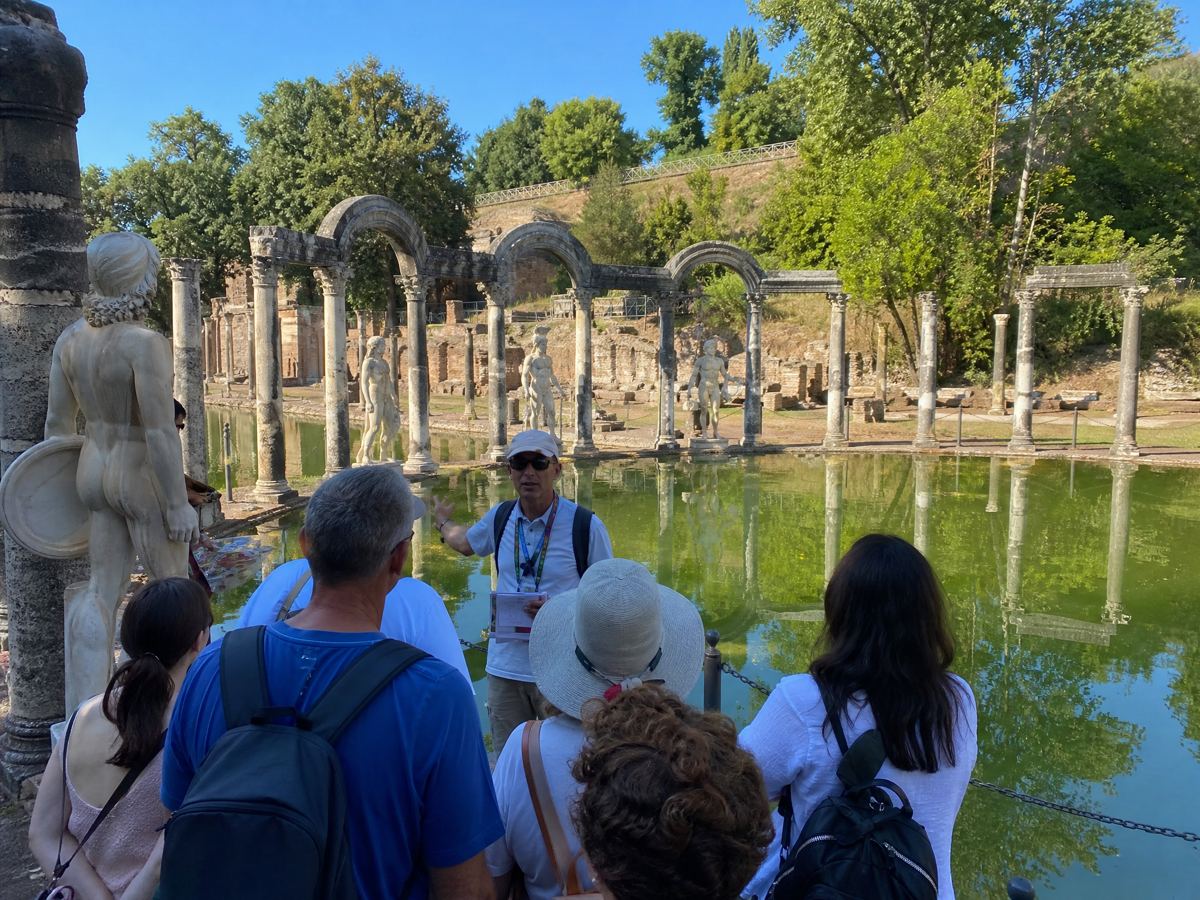
Small group with a guide at the Canopus pool of Hadrian's Villa
★ 4.5 2,462 reviews Best Seller
Villa d'Este & Hadrian's Villa Day Tour
The most-booked Tivoli trip: guided visits of Hadrian's Villa and the Villa d'Este gardens with transport from Rome and admission included. Lunch is an optional extra; reviewers suggest skipping it.
Tour coach on a road near Tivoli with olive trees
★ 4.5 304 reviews Best Value
Tivoli Transfer + Entry Tickets
Coach from Rome to Tivoli and back, with entry tickets to both villas, and the freedom to explore on your own. No guide: the cheapest way to see both without the train-and-bus puzzle.
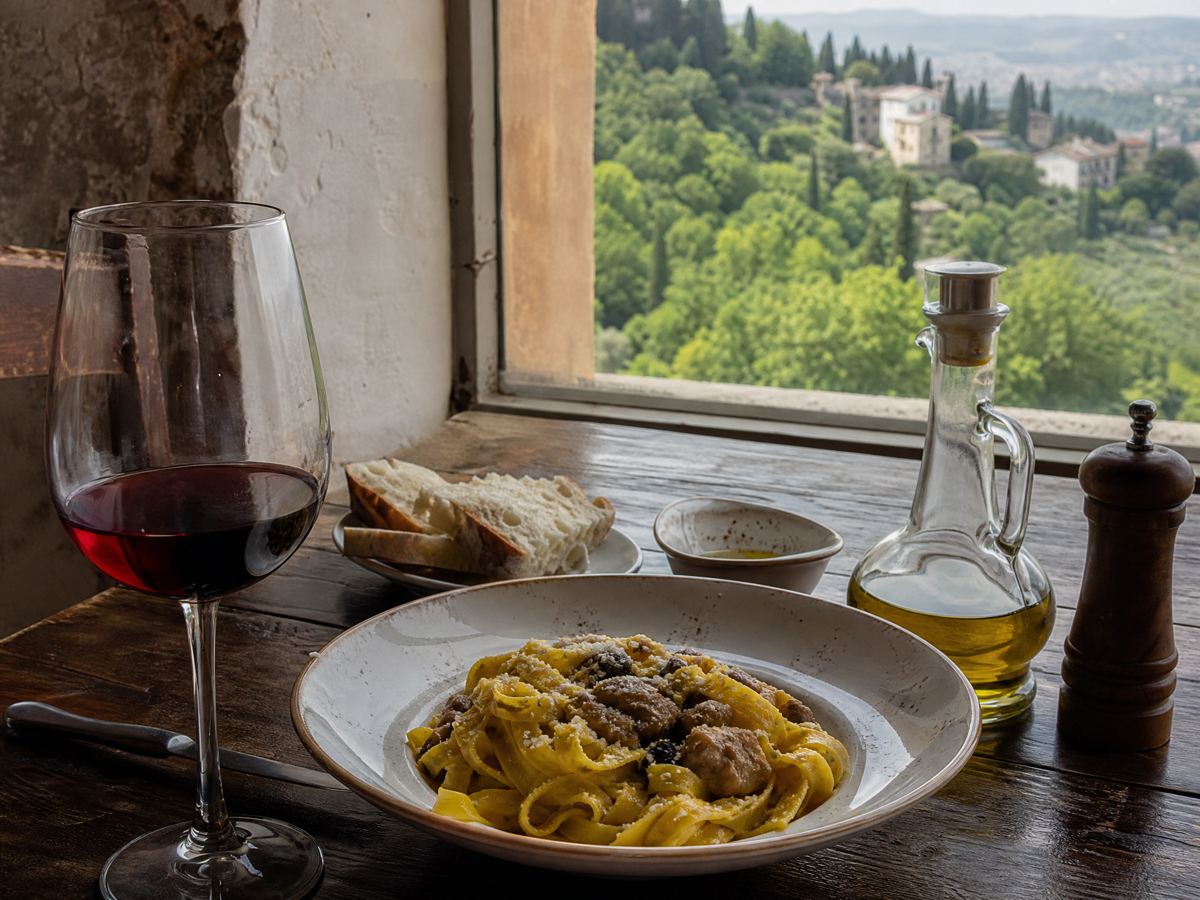
Pasta and wine on a trattoria table in Tivoli
★ 4.4 368 reviews Lunch Included
Villa d'Este & Villa Adriana with Lunch
A full day with a guide, an air-conditioned coach from Rome, entrance tickets to both villas and a traditional Italian lunch in Tivoli. Hotel pickup and drop-off included.
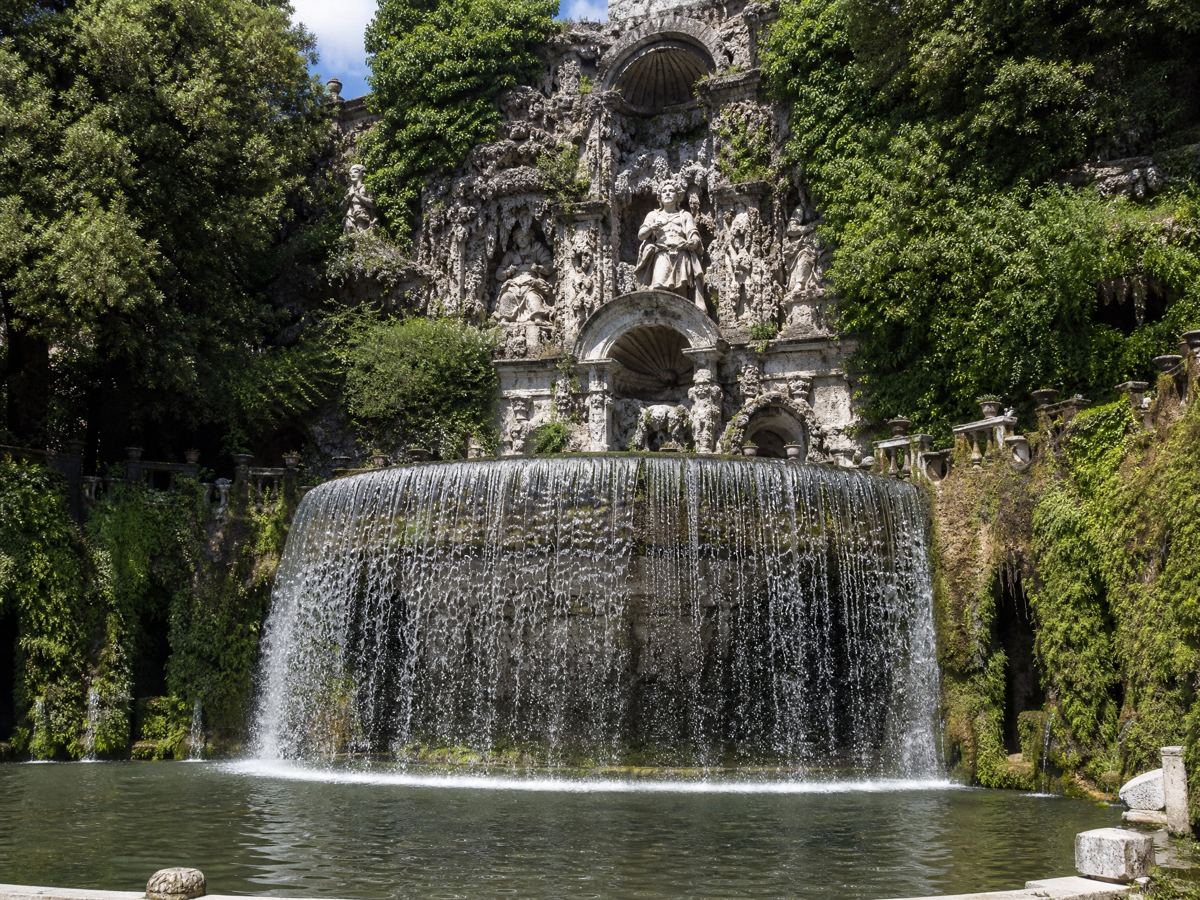
The Oval Fountain at Villa d'Este
★ 4.5 301 reviews GYG Originals
Tivoli Day Trip: Both Villas
A GetYourGuide Originals half-day trip: guide, headsets, transport and tickets to both villas, back in Rome by mid-afternoon. Optional hotel pickup; otherwise meet at Villa Borghese.
The Organ Fountain and Fountain of Neptune at Villa d'Este
★ 4.2 51 reviews Ticket Only
Villa d'Este Skip-the-Line Ticket
Just the entry: a fast-track ticket to Villa d'Este for travellers making their own way to Tivoli. Pair it with the train or Cotral bus from Rome.
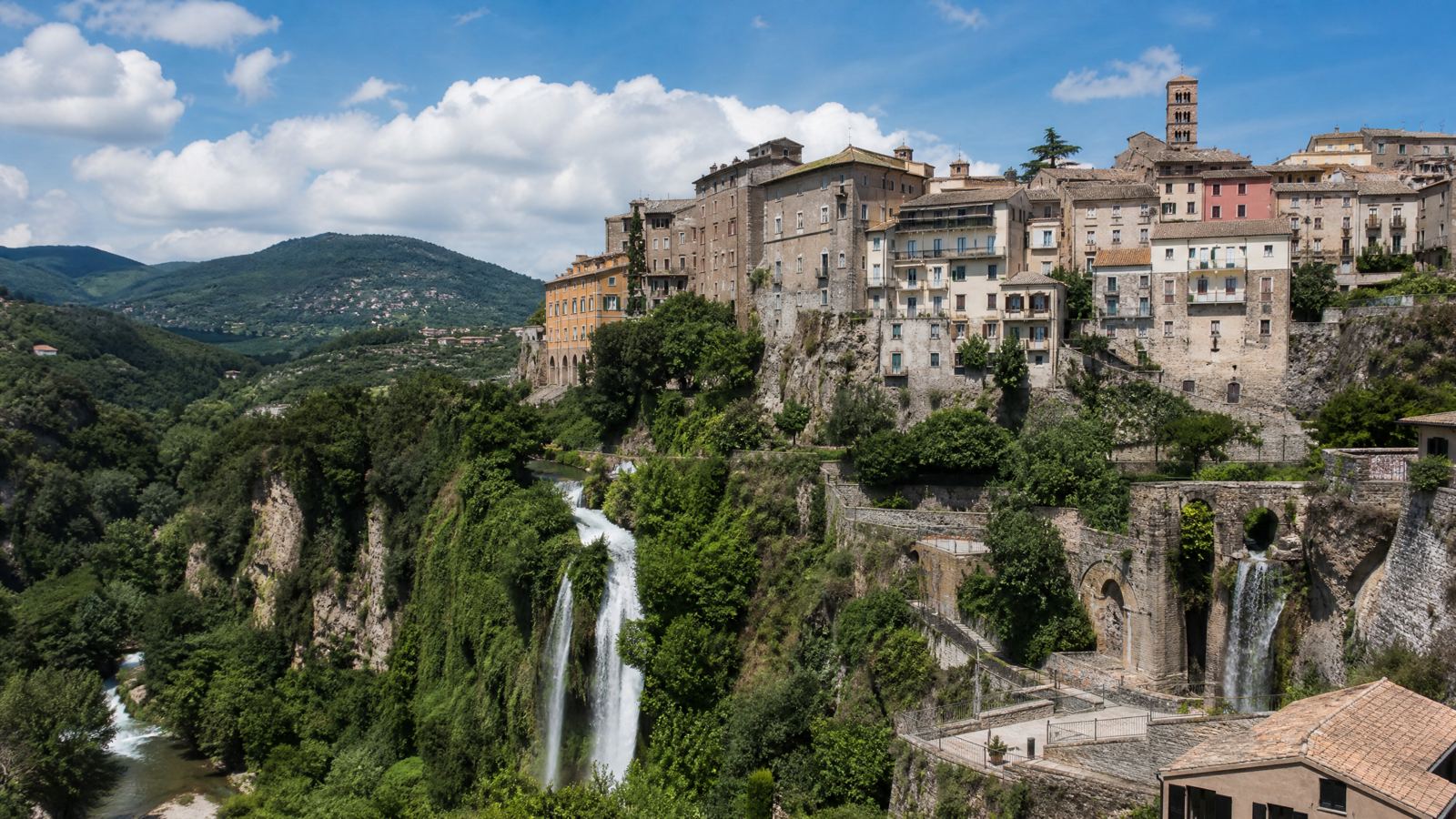
The hilltop town of Tivoli above the Aniene valley
★ 4.9 6 reviews Private
Private Tivoli Day Trip
Your own car and driver from Rome for the day, with entrance tickets to both villas included. Drivers speak English, Italian, Russian or Turkish. Flexible timing, no group.
Compare All Tours →
Live Availability

Villa d'Este & Hadrian's Villa Day Tour: Check Dates

Powered by GetYourGuide

Prices shown in USD. Free cancellation up to 24 hours before. Powered by GetYourGuide.

Compare Options

Ticket, Transfer or Guided Tour?

What's Included Ticket Only€15 at the villa Transfer + TicketsFrom $67 Guided Day Tour Best SellerFrom $73
Villa d'Este entry ✓ ✓ ✓
Hadrian's Villa entry — (VILLÆ Pass €30) ✓ ✓
Transport from Rome — ✓ coach ✓ coach
Guide — — ✓
Lunch — — Optional extra
Flexibility Total Explore at your own pace Fixed schedule
Booking Official site or ticket office GetYourGuide · free cancellation GetYourGuide · free cancellation
Best for Independent travellers staying in Tivoli or happy with trains and buses Travellers who want both villas without a guide First-timers who want both villas explained
Ready to book? Skip-the-Line Ticket Book Transfer Book Day Tour
Look Closer

The Fountains You Shouldn't Miss

Beyond the Hundred Fountains and the Organ, four that most visitors hurry past.

The Oval Fountain at Villa d'Este Fontana dell'Ovato

The Oval Fountain

A curtain of water falls from a curved basin into an oval pool, in front of an artificial mountain representing the Tivoli hills. You can walk behind the falling water along a nymphaeum. It was one of the first fountains built.

The Rometta fountain at Villa d'Este La Rometta

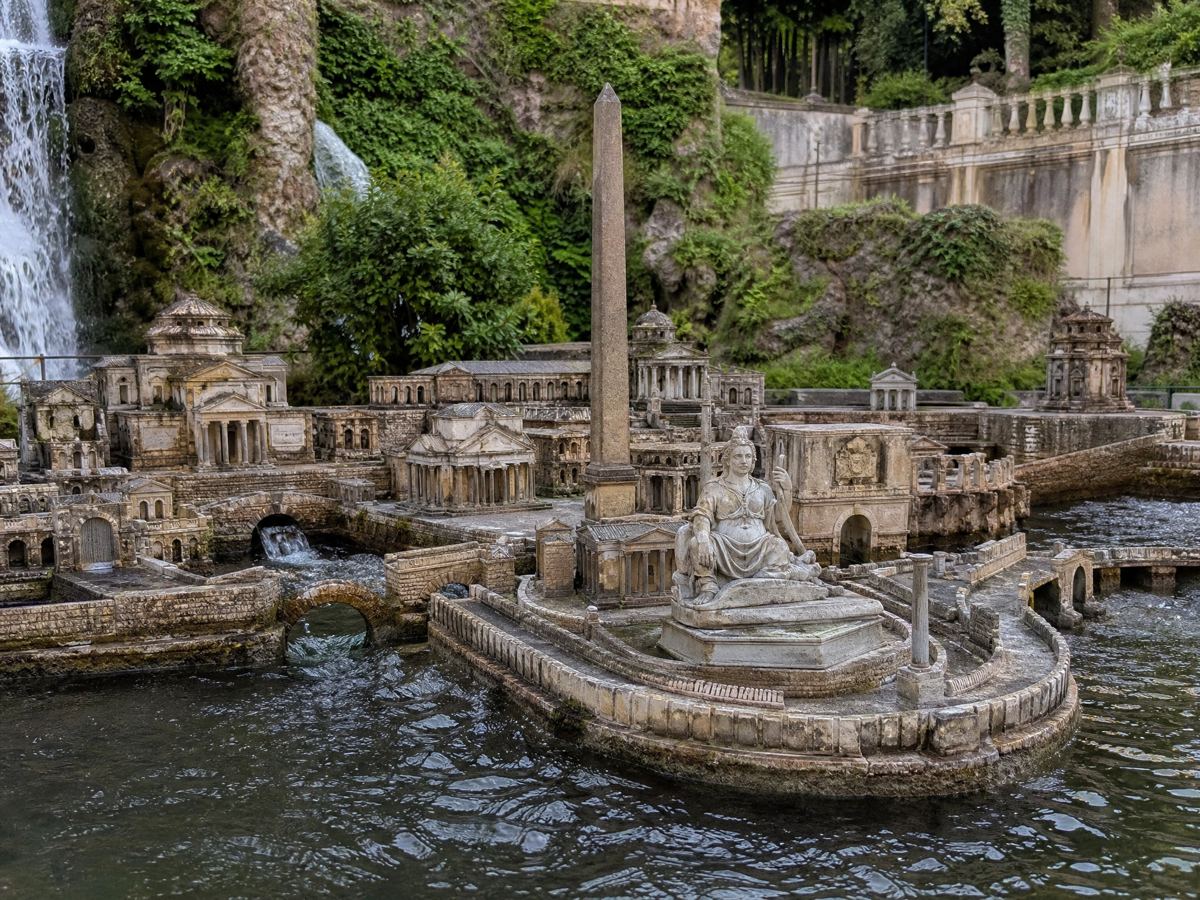
Rome in Miniature

Ligorio built a model of ancient Rome at the end of the Hundred Fountains, with temples, an obelisk and a boat-shaped island for the Tiber. It was the cardinal's way of saying that Tivoli could rival the capital.

The Fountain of the Dragons at Villa d'Este Fontana dei Draghi

The Fountain of the Dragons

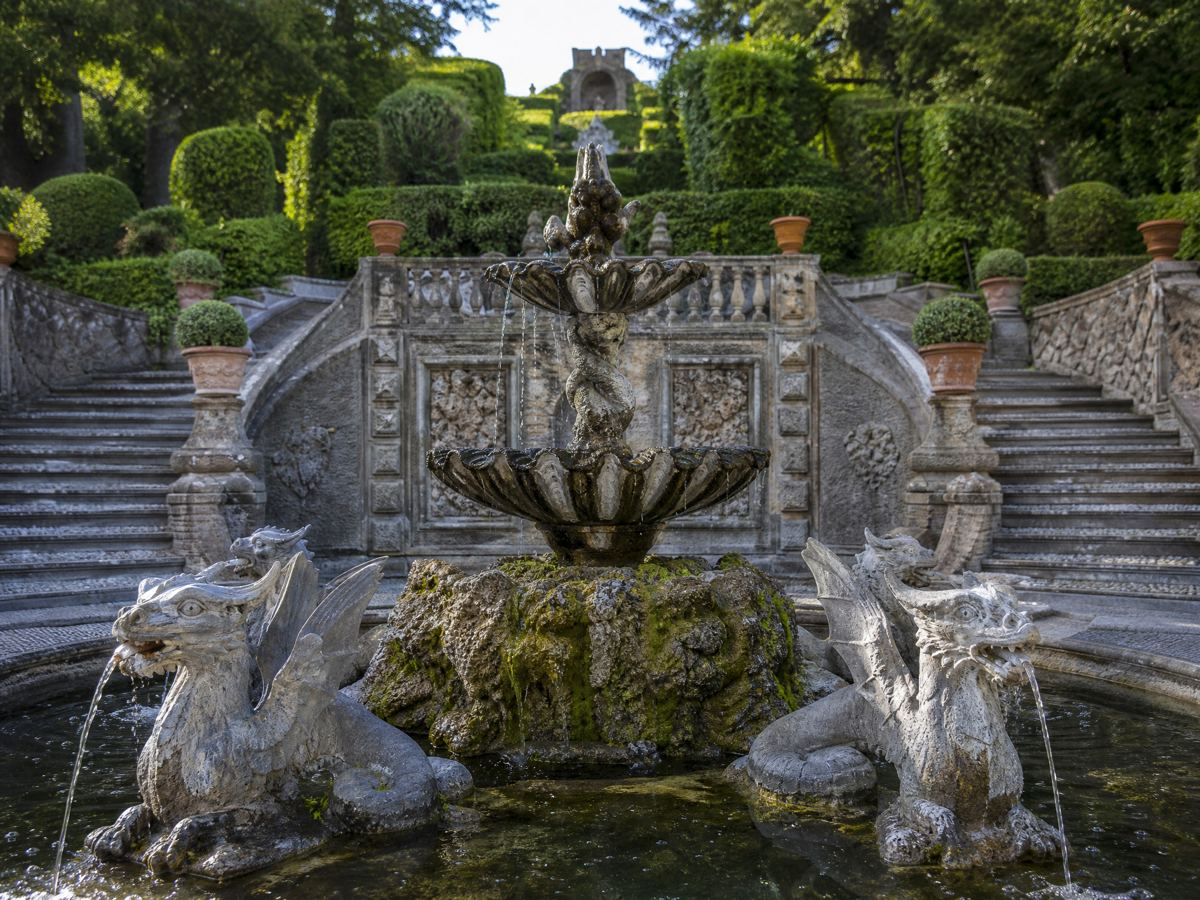
Four dragons spout water at the centre of the garden's main axis, with curved stairs on either side. The dragon was a heraldic emblem of Pope Gregory XIII, whose visit the fountain was finished to celebrate.

Statue of Diana of Ephesus spouting water at Villa d'Este Fontana della Natura

Diana of Ephesus

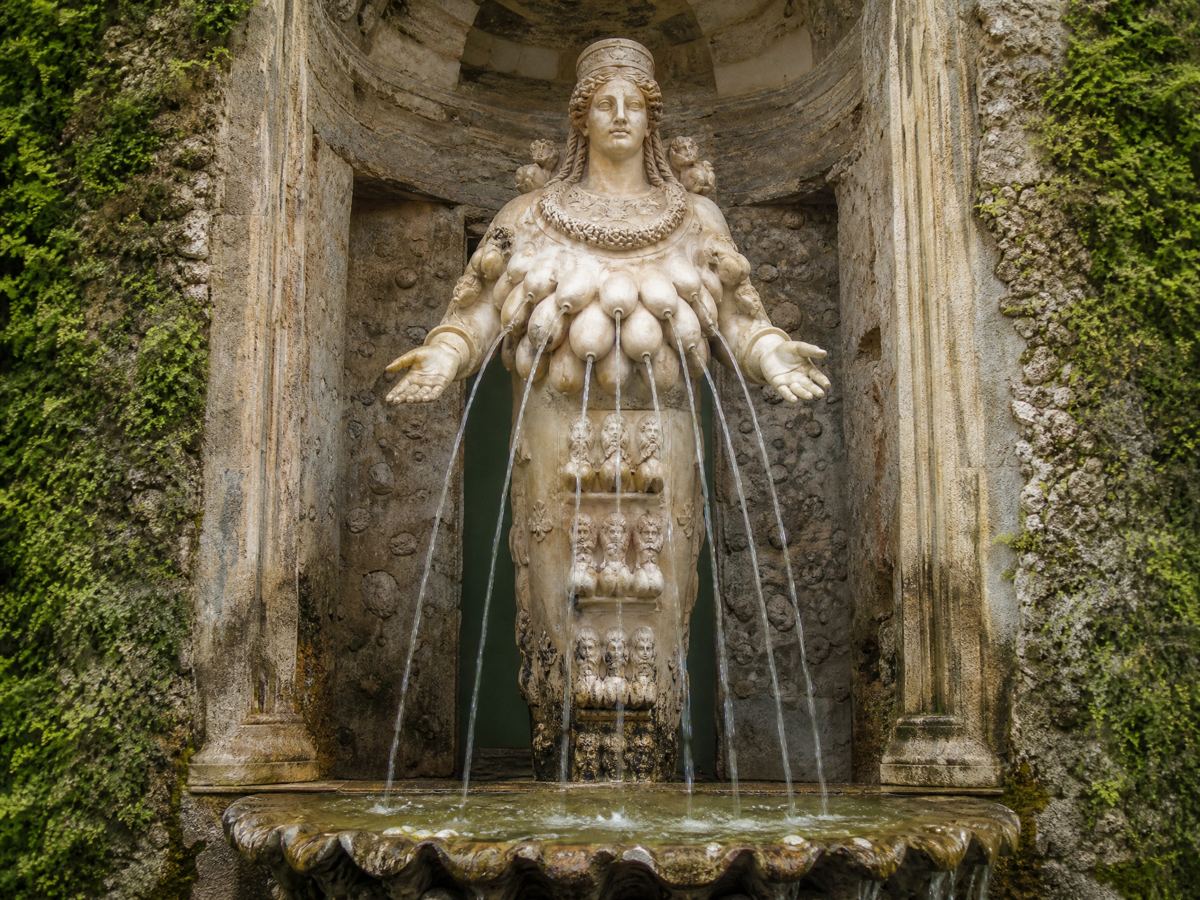
A statue of the many-breasted goddess of nature, water streaming from her body. She was moved to her current, quieter position in the garden, and many visitors miss her entirely.

Plan Your Visit

What to Know Before You Go

Best Time to Visit

Arrive at opening (8:30) on a weekday, before the tour groups from Rome. Spring and autumn are ideal; in summer, the lower garden is cool and shady but the climb back up is hot.

Catch the Organ

The Organ Fountain plays from 10:30, then every two hours. Check the time when you arrive and plan your descent through the garden so you are in front of it.

How Long to Allow

Two to three hours for the palace and gardens. If you add Hadrian's Villa the same day, start early: it needs another two to three hours.

Mondays

On Mondays the villa opens at 14:00. Many tours run on other days; if you go independently on a Monday, visit Hadrian's Villa in the morning and Villa d'Este after lunch.

Wear Good Shoes

The garden drops more than 45 metres from the palace to the fish ponds, with steps, slopes and wet gravel near the fountains. Flat shoes with grip, and expect some spray.

Combine Your Tickets

If you're visiting both villas, the VILLÆ Pass (€30, 72 hours) covers Villa d'Este, Hadrian's Villa and the Sanctuary of Hercules Victor. Under-18s are free everywhere.

Common Questions

Villa d'Este FAQ

How much are Villa d'Este tickets?
A full ticket to Villa d'Este costs €15. EU citizens aged 18 to 25 pay €2, and under-18s enter free. The VILLÆ Pass, valid for 72 hours, covers Villa d'Este, Hadrian's Villa and the Sanctuary of Hercules Victor for €30 (€4 for ages 18 to 25). Booking online can add a small reservation fee.
What is the best way to visit Villa d'Este from Rome?
Tivoli is about 30 km east of Rome. You can take the regional train from Roma Tiburtina or the Cotral bus from Ponte Mammolo metro station, then walk up to the villa. The easiest option is a day tour that includes transport and tickets, usually combined with Hadrian's Villa.
Can you visit Villa d'Este and Hadrian's Villa in one day?
Yes, and most people do. The two villas are about 5 km apart, at the top and bottom of the Tivoli hill. Allow two to three hours for each. Day tours from Rome cover both in five to seven hours, and the VILLÆ Pass gives you entry to both for €30.
What are the opening hours?
Villa d'Este opens every day from 8:30, except on Monday mornings: on Mondays it opens at 14:00. Closing time changes with the season, from late afternoon in winter to early evening in summer, with last entry an hour before the gardens close. It is closed on 1 January and 25 December.
When does the Organ Fountain play?
The water organ of the Organ Fountain plays every day, starting at 10:30 and then every two hours. Plan your route through the garden so you are below it at one of those times; the show is short.
Is Villa d'Este free on any day?
Yes. Entry is free on the first Sunday of every month and on 25 April, 2 June and 4 November, and free for women on 8 March. These days are busy, so arrive at opening time.
How long does a visit take?
Plan on two to three hours for the palace and gardens. The garden falls steeply down the hill, so you will walk down and back up again; give yourself time to stop at the main fountains and on the terraces.
Is Villa d'Este worth visiting?
Yes. It is a UNESCO World Heritage Site and the finest Renaissance water garden in Italy, with hundreds of jets and fountains fed by gravity alone, as they were in the 1560s. If you add Hadrian's Villa, it is one of the best day trips from Rome.
Who built Villa d'Este?
Cardinal Ippolito II d'Este (1509–1572), son of Alfonso I d'Este, Duke of Ferrara, and Lucrezia Borgia. Made governor of Tivoli in 1550, he had the architect and antiquarian Pirro Ligorio design a villa and garden to rival the palaces of ancient Rome. Work began in 1560.
Is Villa d'Este accessible?
Only partly. The garden is built on a steep hillside with many steps and slopes, and it is hard going for wheelchair users and with pushchairs. The palace and upper terrace are easier. Contact the site before your visit to plan an accessible route.
Do the fountains always work?
Almost always. The fountains are fed by water from the Aniene river, and after heavy rain the supply can be suspended for a while. A few fountains, like the Owl Fountain, are sometimes out of action for restoration.
Which Villa d'Este tour should I book?
For most people, the best-selling guided day tour with Hadrian's Villa, from about $73, is the best value. If you want to explore on your own, the coach transfer with both entry tickets costs less. For a slower day, there are tours with lunch and private tours with a driver.
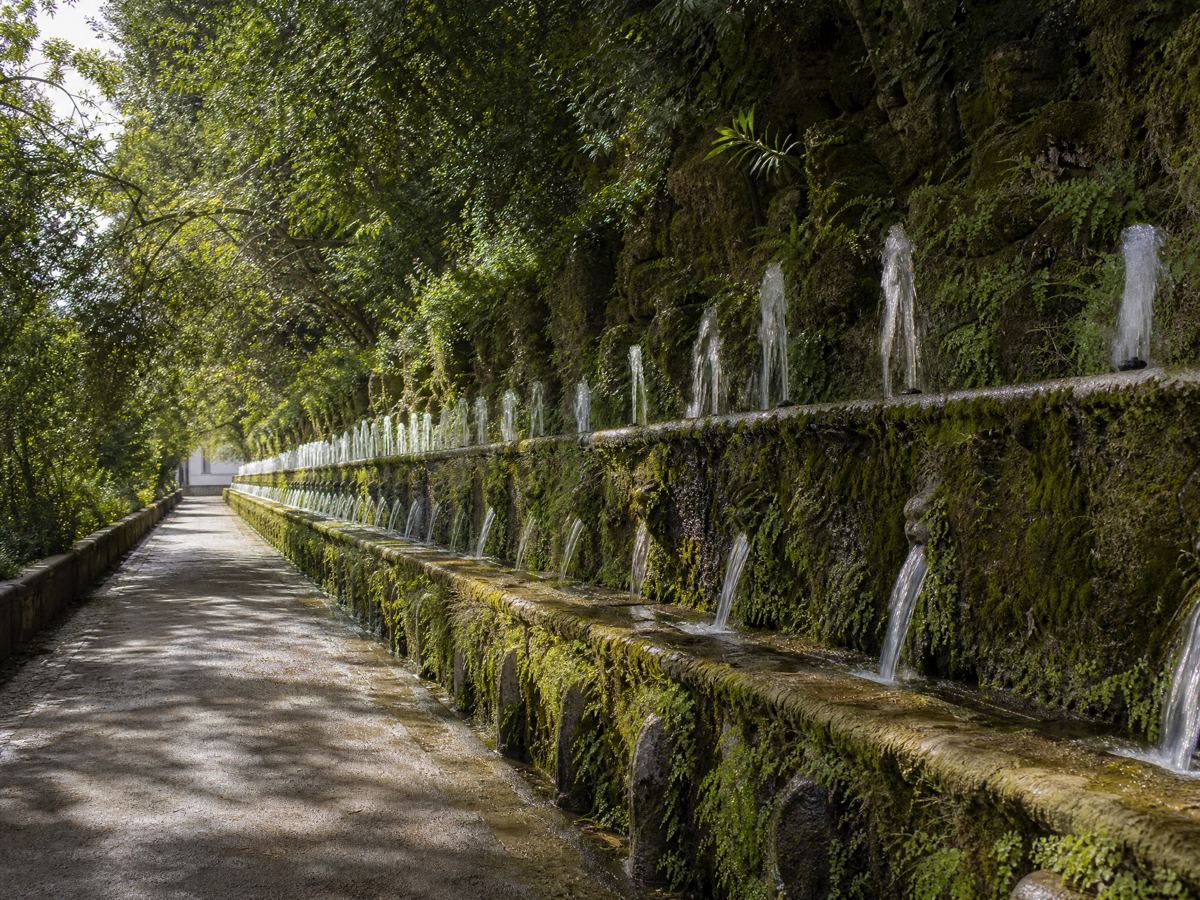
Mossy fountain jets along a garden path at Villa d'Este

Need More Help?

Choosing a tour, getting to Tivoli by train, or combining with Hadrian's Villa: ask us.

Contact Us →
Insider Guide

Everything You Need to Know About Villa d'Este

The cardinal, the engineering, the music it inspired, and how to make the most of a day in Tivoli.

A Garden Built on Water

Villa d'Este is a hillside of water. The cardinal had part of the Aniene river diverted through a tunnel under the town, and from there gravity does all the work: hundreds of jets, cascades and channels, without a single pump.

It still works the same way. The pressure that makes the Neptune jets climb comes from the height of the hill, as it did in the 1560s.

The Cardinal Who Wanted to Be Pope

Ippolito II d'Este was a grandson of Pope Alexander VI and the son of Lucrezia Borgia. Rich, cultured and ambitious, he ran for pope five times and lost every time.

In 1550 he was made governor of Tivoli for life. He threw his money and his disappointment into a villa that would outshine any palace in Rome.

Pirro Ligorio's Plan

The designer was Pirro Ligorio, painter, architect and antiquarian, who had studied the ruins of Hadrian's Villa below the town. He laid out the garden on a strict grid along a central axis, with five cross-axes, and filled it with symbols of the Este family and of Hercules.

Marble and statues came straight from Hadrian's Villa.

Inside the Palace

The palace was built on the site of a Benedictine, later Franciscan, convent. Teams of painters led by Girolamo Muziano, Livio Agresti and Federico Zuccari covered its rooms in frescoes of myths, landscapes and the history of Tivoli in the 1560s.

You enter through these rooms; take your time before the garden pulls you outside.

Liszt's Jeux d'Eau

In the 19th century Cardinal Gustav von Hohenlohe took over the neglected villa and restored it. His friend Franz Liszt stayed here many times from the 1860s.

The fountains inspired one of his late piano pieces, 'Les jeux d'eaux à la Villa d'Este', which in turn influenced Ravel and Debussy.

Neglect and Revival

After the Este line passed to the Habsburgs, the villa was stripped of many of its statues in the 18th century and the garden grew wild. The Italian state took it over after the First World War and began a long restoration.

It was damaged by bombing in 1944 and repaired after the war. In 2001 it became a UNESCO World Heritage Site.

Hadrian's Villa: the Other Half

Five kilometres below the town lies Hadrian's Villa, the vast country palace of the emperor Hadrian, built in the 2nd century. Ligorio studied it and the cardinal plundered it.

Seeing the ruins and then the Renaissance garden they inspired is the reason most people make the trip to Tivoli. Both are run by the same institute, the VILLÆ.

Tivoli Itself

Tivoli was a summer retreat for Romans long before the cardinal. The old town has a Roman Temple of Vesta perched over the Aniene gorge, and the Villa Gregoriana park with its waterfalls.

If you have time after the villas, have a coffee in the old town and walk to the gorge before the drive back to Rome.

Practical Advice From People Who've Been

Go Down, Then Up

The route runs from the palace at the top to the fish ponds at the bottom. Pace yourself on the way down; the climb back to the exit at Piazza Campitelli is the hard part.

Skip the Tour Lunch?

Reviews of tours with lunch are mixed on the food. If your tour has free time, a coffee and a slice of pizza in Tivoli's old town can be the better choice.

Independent by Train

Trains run from Roma Tiburtina to Tivoli in about an hour. From the station it is a walk of about 20 minutes, uphill, across the river and through the old town.

Villa d'Este vs. Hadrian's Villa

Villa d'Este is about water, gardens and the Renaissance; Hadrian's Villa about ruins and open landscape. If you can only do one, choose by what you love. Better still, do both.

Ready to Visit Villa d'Este?

Book the best-selling day tour with Hadrian's Villa, or compare all the options first. Free cancellation up to 24 hours before.

Day Tour from $73 → Compare All Tours